
Quote first.
Without guessing.
Your client answers the right questions up front. Your team gets a scope it can estimate without chasing anyone. Your offer lands first, and holds up later.
Your client answers the right questions up front. Your team gets a scope it can estimate without chasing anyone. Your offer lands first, and holds up later.
Two minutes: a real brief, the questions it raises, the client's answers, and a scope your team can estimate from.
Your client asked three agencies for a quote. Yours waits on a tech lead who needs details, who waits on sales, who waits on the client. Rush it, and what nobody asked about turns up in sprint 3 — as rework, or as an argument.
Any AI tool can turn a brief into a proposal in two minutes. It gets there by guessing — and you find out which guesses were wrong after you've quoted.
Scopro asks first. What it still doesn't know stays visible as an assumption, a risk or an open question. Fast only helps if the quote holds up.
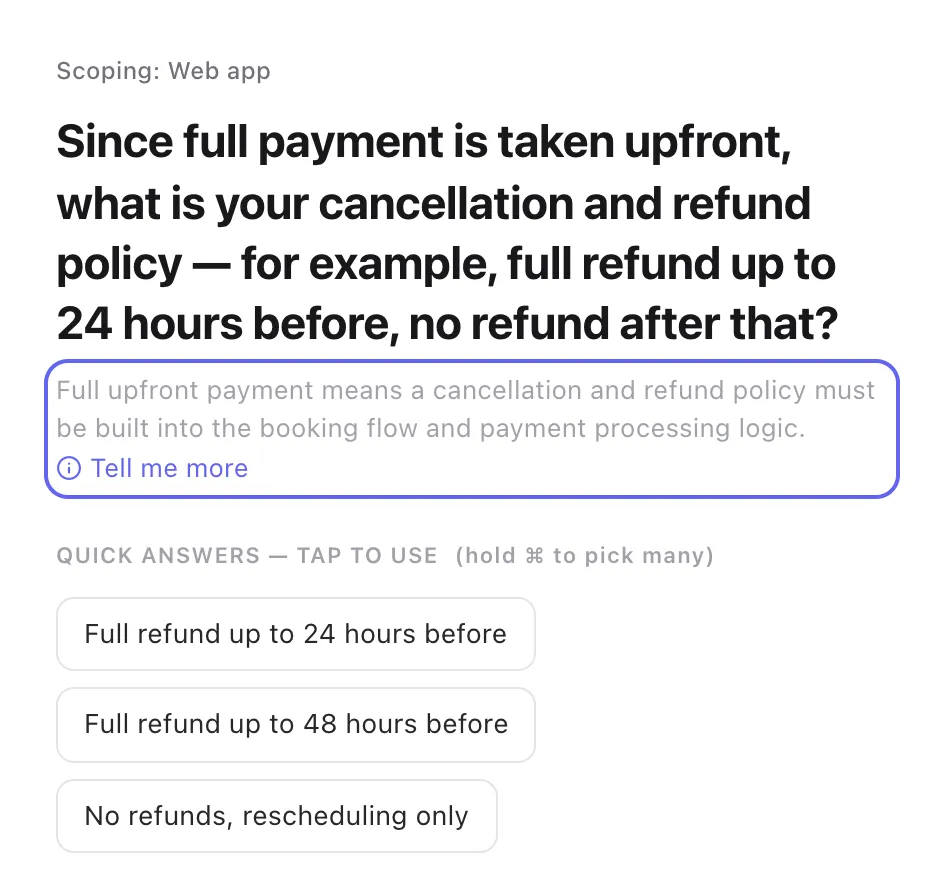
Paste a brief, an email or a call transcript. Scopro asks the questions your tech lead would ask — one at a time, each with a note on why it matters — and follows up when an answer opens a new gap.
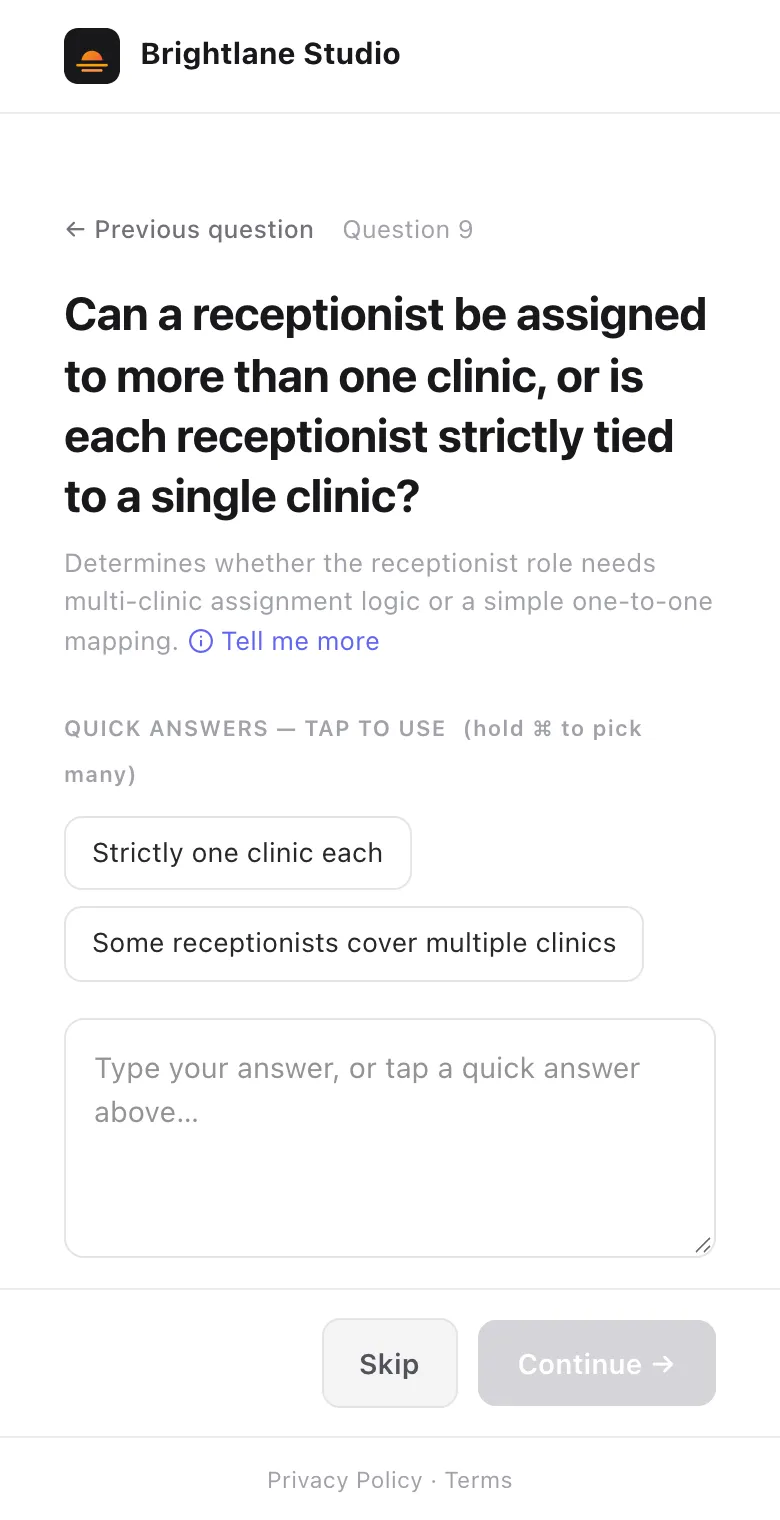
Send one link with your agency's logo. No account, no email thread: the client answers in one sitting, follow-up questions appear as they go, and you're notified when they're done.
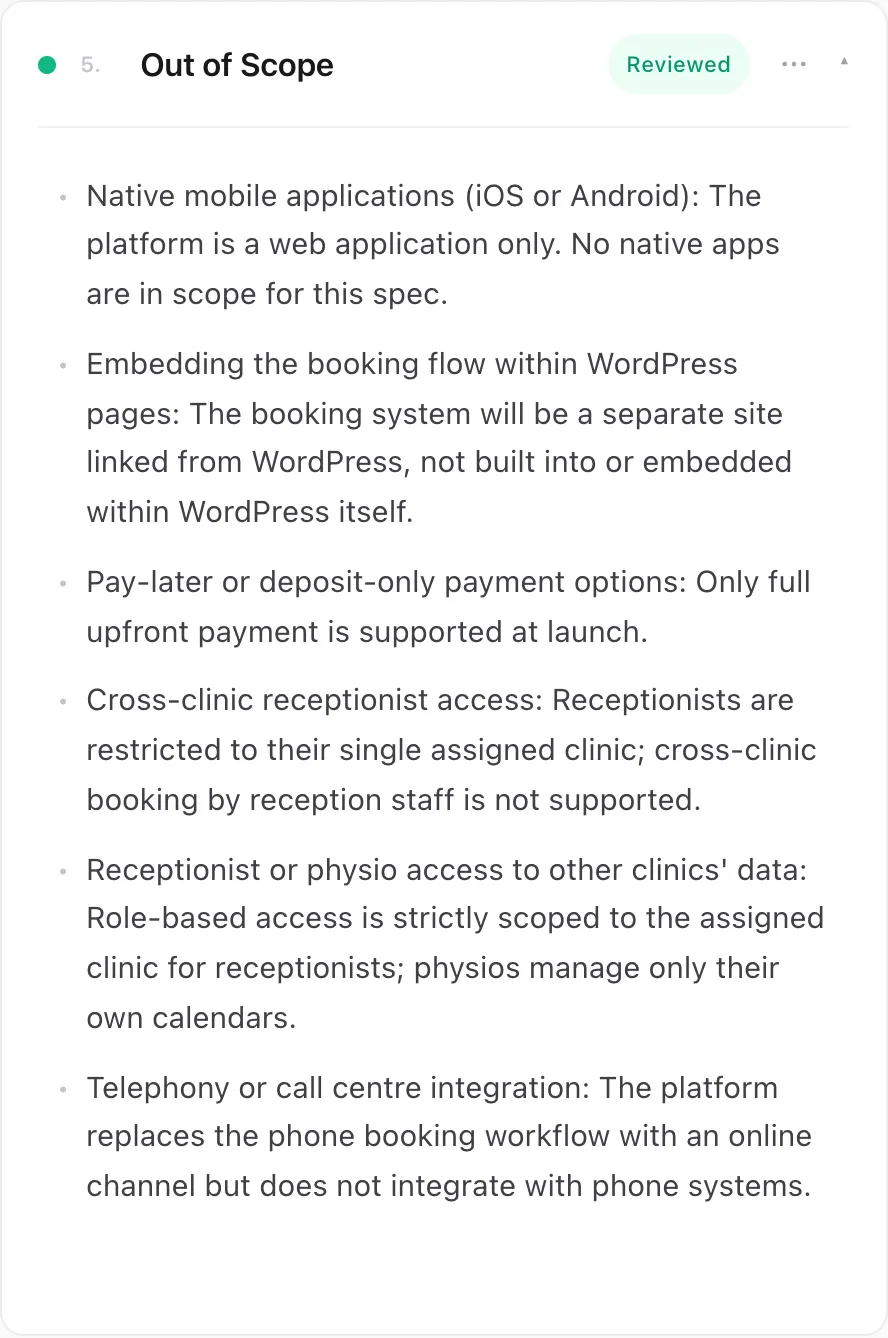
Functional scope, out of scope, assumptions, risks and open questions — every block editable, open to comments and @mentions. The client reviews it through a link; regenerate with their comments and see exactly what changed.
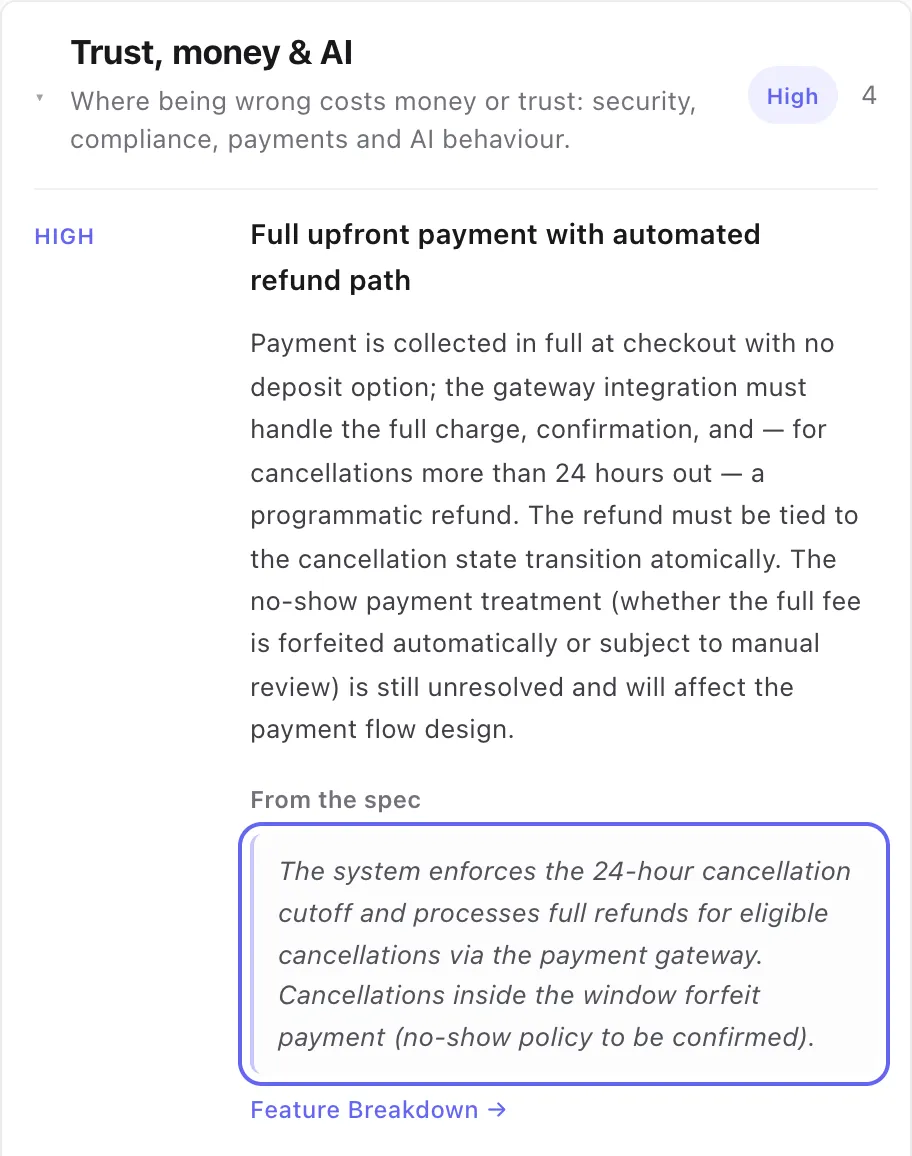
A read of the project's complexity: what's actually demanding here, each point quoted back to the line in the scope that caused it. It's not an estimate — it's what your team needs to make one.
Included credits cover roughly one, two or five specs. Extra packs are one-time purchases, pooled and never expiring.
One-time purchase, for trying Scopro on a real project.
For independent tech leads running their own scoping.
Billed monthly
For teams: org management and more included AI credits.
Billed monthly
Prices in USD, excluding VAT. VAT is added at checkout where applicable.
It says so. Gaps become assumptions, risks and open questions in the document instead of confident filler.
No, on purpose. It gives your team the scope and the complexity behind it, each point quoted from the scope itself. Your team makes the estimate.
No. They answer your questions and comment on the scope through a link, on any device.
Not for every project. Scopro gets you most of what discovery is for — the questions, the scope, the risks — before the deal is signed. When a project still needs a workshop, you start it with the questions already answered.
Yes — upload the transcript (VTT from Zoom or Teams, or any text) and Scopro treats it as part of the brief.
Everything, block by block, with version history.
Plans include AI credits and each generation shows its cost. Buy packs if you need more — pack credits are pooled and never expire.
Still have questions? Write to hello@scopro.ai